
Ulcerative Colitis
Diagnosis is based on clinical evaluation, laboratory testing, and colonoscopy with biopsy. While there is no cure, effective treatments – including medications and, in some cases, surgery – can control inflammation, relieve symptoms, and maintain long-term remission. In addition to medical therapy, nutrition, lifestyle factors, and ongoing monitoring play an important role in overall disease management and quality of life.
What Is Ulcerative Colitis?
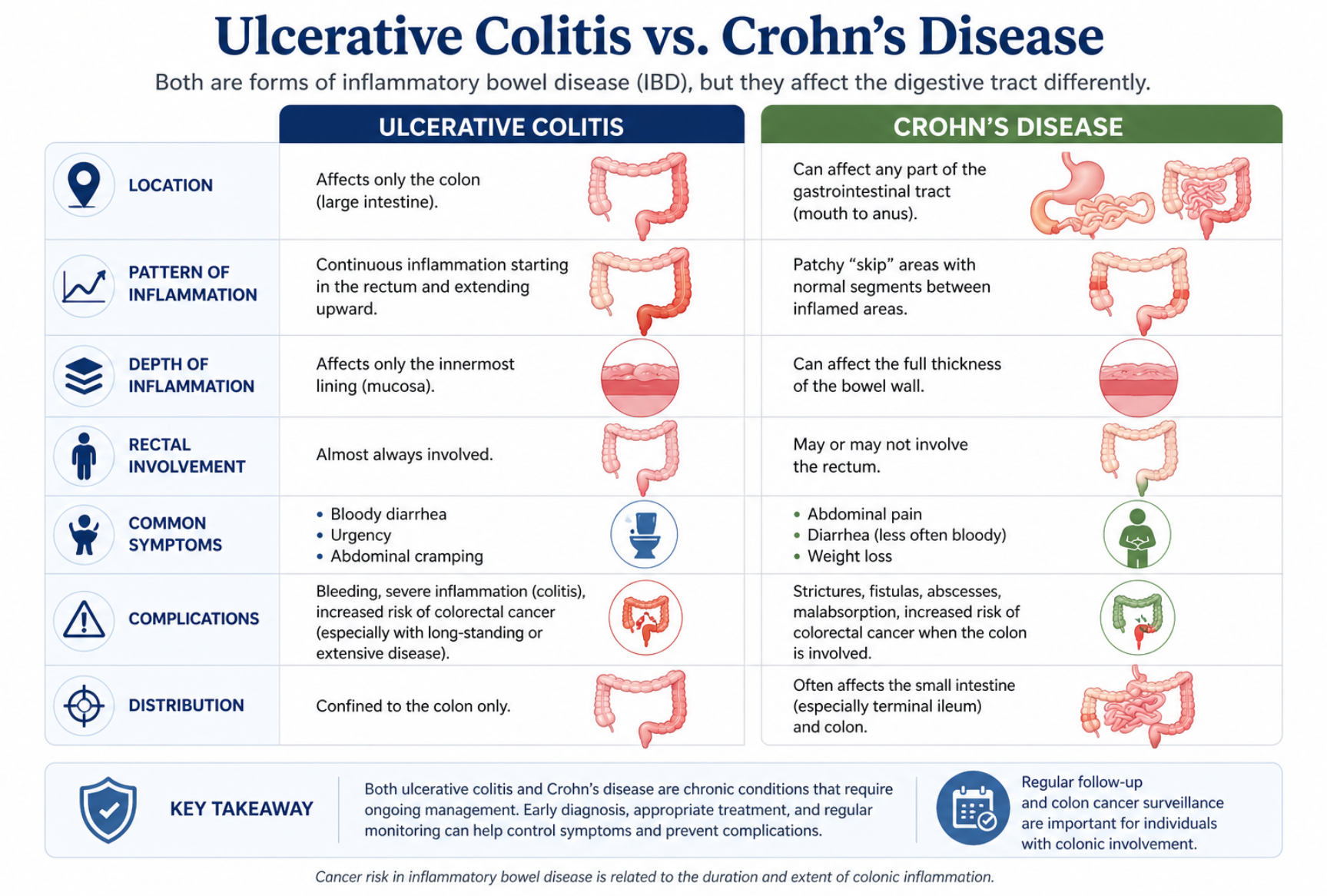
Ulcerative colitis is a chronic inflammatory condition that affects the colon (large intestine). It is characterized by inflammation and ulceration of the inner lining of the colon, which can lead to frequent bowel movements. Common symptoms include diarrhea (which may be bloody), urgency, and crampy abdominal pain.
Inflammation typically begins in the rectum and extends upward in a continuous pattern through the colon. In some individuals, it may involve only the rectum (ulcerative proctitis), while in others it can affect a larger portion or the entire colon.
Ulcerative colitis is one of the two main types of inflammatory bowel disease (IBD), along with Crohn’s disease. While both conditions involve chronic inflammation of the gastrointestinal tract, there are important differences. Ulcerative colitis affects only the colon and involves the superficial (innermost) lining of the bowel. In contrast, Crohn’s disease can affect any part of the gastrointestinal tract and often involves deeper layers of the bowel wall. Additionally, inflammation in ulcerative colitis occurs in a continuous pattern, whereas Crohn’s disease is characterized by “skip” areas of normal tissue between inflamed segments.
What Are The Causes of Ulcerative Colitis?
The exact cause of ulcerative colitis is not fully understood. Current research suggests that it results from a complex interaction between genetic predisposition, the immune system, and environmental factors.
In individuals with ulcerative colitis, the immune system becomes inappropriately activated and targets the lining of the colon, leading to chronic inflammation. Environmental triggers – such as infections, changes in the gut microbiome, or other external factors – may initiate or amplify this response in susceptible individuals.
Once this process begins, the immune system does not properly “turn off,” allowing inflammation to persist and damage the intestinal lining, which leads to symptoms.
A central goal of treatment is to help regulate the immune response, reduce inflammation, and promote healing of the colon.
What Ulcerative Colitis Is NOT Caused By
Ulcerative colitis is often misunderstood. It is not caused by:
- A specific infection
- Something you ate or a single dietary choice
- Stress alone (although stress can worsen symptoms)
- Poor hygiene or lifestyle habits
While diet and stress can influence symptoms, they do not cause the underlying disease. Ulcerative colitis is a medical condition driven by immune dysregulation, not something a patient has caused or can control.
What Are The Signs And Symptoms of Ulcerative Colitis?
Symptoms of ulcerative colitis most commonly include diarrhea – often with blood – which may be associated with crampy abdominal pain and a sudden urgency to have a bowel movement. Symptoms can develop gradually or appear more abruptly.
Other common symptoms include loss of appetite, weight loss, and fatigue. In cases of more significant or prolonged bleeding, anemia may occur.
Ulcerative colitis typically follows a pattern of flares and remission, with periods of active symptoms alternating with times when symptoms improve or resolve.
Although ulcerative colitis primarily affects the colon, it can also involve other parts of the body, including the joints, eyes, skin, and liver.
Common Symptoms:
- Diarrhea, often with blood or mucus
- Urgency to have a bowel movement
- Crampy abdominal pain
- Rectal bleeding
- Fatigue
- Loss of appetite
- Weight loss
- Anemia (in more severe or prolonged cases)
Symptoms vary from person to person and do not always correlate perfectly with the degree of inflammation. Even when symptoms improve, ongoing monitoring is important to ensure that inflammation is adequately controlled.
What Are The Risk Factors of Ulcerative Colitis?
Ulcerative colitis affects an estimated 1 to 1.3 million people in the United States. It occurs in both men and women at similar overall rates.
The condition is most commonly diagnosed in young adults, with a peak onset between the late teens and early 30s. However, ulcerative colitis can develop at any age, including later in life.
Family history plays an important role. Up to 20% of individuals with ulcerative colitis have a close relative with inflammatory bowel disease (either ulcerative colitis or Crohn’s disease), suggesting a genetic predisposition. However, most people with ulcerative colitis do not have a family history, and it is not possible to predict who will develop the condition.
Ulcerative colitis has been reported more frequently in certain populations, including individuals of European or Ashkenazi Jewish ancestry, though it can affect people of all backgrounds.
Understanding who is at risk can help guide earlier evaluation and diagnosis, particularly when symptoms such as persistent diarrhea, rectal bleeding, or abdominal pain are present.
How is Ulcerative Colitis Diagnosed?
The diagnosis of ulcerative colitis is based on a combination of clinical history, physical examination, and targeted testing.
Evaluation typically includes:
- Stool studies to rule out infection
- Blood tests to assess for inflammation, anemia, and other markers
- Colonoscopy with biopsies, which allows direct visualization of the colon and confirmation of inflammation through microscopic tissue analysis
During colonoscopy, the end of the small intestine (terminal ileum) is often examined. If it appears normal, additional small bowel evaluation is usually not necessary unless symptoms raise concern for Crohn’s disease.
Biopsies are an important part of the evaluation, as they can confirm the diagnosis and help distinguish ulcerative colitis from other conditions that may appear similar.
What Are the Treatment Options for Ulcerative Colitis?
There is currently no cure for ulcerative colitis, but effective treatments are available to control inflammation, relieve symptoms, and maintain remission. The goal of therapy is to regulate the immune response, promote healing of the colon, and prevent flares.
Treatment is individualized based on disease severity, location, and response to prior therapies.
Medications Used to Treat Ulcerative Colitis
Aminosalicylates (5-ASA):
These medications are commonly used as first-line therapy for mild to moderate ulcerative colitis. For patients with left-sided disease or ulcerative proctitis, rectal formulations (such as mesalamine enemas or suppositories) are often more effective than oral therapy alone. In many cases, a combination of oral and rectal therapy provides the greatest benefit.
Corticosteroids:
Medications such as prednisone and budesonide are effective for short-term control of active inflammation. They are not used for long-term maintenance due to potential side effects, and the goal is to taper and discontinue them as soon as possible.
Immune modulators:
Agents such as azathioprine and 6-mercaptopurine (6-MP) help suppress the immune response and may be used to maintain remission. They are generally not used for induction of remission and are less commonly used as first-line therapy in the era of biologics, though they may be used in select patients or in combination therapy.
Biologic and targeted therapies:
These medications are now a mainstay for moderate to severe ulcerative colitis. They target specific pathways in the immune system and can be used to both induce and maintain remission. Options include anti-TNF agents, integrin inhibitors, interleukin inhibitors, and oral small-molecule therapies.
Role of Surgery
Medical therapy is effective for many patients, but surgery may be necessary in certain situations. These include severe disease that does not respond to medications, complications such as significant bleeding or perforation, or long-standing disease with precancerous changes.
Surgery for ulcerative colitis typically involves removal of the colon (colectomy), which eliminates the disease from the colon. While surgery can be curative for ulcerative colitis, it is generally reserved for patients who do not respond to medical therapy or develop complications.
Advances in medical therapy have significantly improved outcomes, allowing most patients with ulcerative colitis to achieve good symptom control and maintain a high quality of life.
Additional Strategies to Help Manage Ulcerative Colitis and Proctitis
Nutrition
Nutrition plays an important role in managing ulcerative colitis. A thoughtful, well-balanced diet can help reduce symptoms, maintain energy, and support overall health.
For most individuals, a Mediterranean-style diet is recommended. This includes:
- Fresh fruits and vegetables
- Whole grains and complex carbohydrates
- Lean proteins
- Healthy fats such as olive oil
Limiting ultra-processed foods, added sugars, and excess salt may help reduce inflammation and support overall well-being. Some evidence also suggests that reducing intake of red and processed meats and avoiding sugar-sweetened beverages may be beneficial.
Dietary adjustments should be individualized. For example:
- Those with lactose intolerance may benefit from limiting dairy
- Caffeine may worsen symptoms during periods of active diarrhea
During flares, a lower-fiber diet may help improve symptoms. However, as inflammation improves, gradual reintroduction of fiber – particularly soluble fiber – is encouraged.
Beyond symptom control, maintaining good nutrition is an important part of long-term health, including reducing the risk of cardiovascular disease and other chronic conditions.
Emotional Health
Ulcerative colitis is not caused by stress, anxiety, or emotional factors. However, stress can influence symptoms and may contribute to disease flares in some individuals.
Living with a chronic condition can be challenging, and emotional responses such as stress, frustration, or fatigue are common. Supportive strategies—such as stress management, mindfulness, or speaking with a therapist familiar with chronic illness—can be helpful for some patients.
Taking care of emotional well-being is an important part of overall disease management and quality of life. A comprehensive approach – including medical therapy, nutrition, and emotional support – can help patients achieve better symptom control and long-term stability.
Ulcerative Colitis and Pregnancy
Many individuals with ulcerative colitis can have healthy pregnancies and families. Careful planning and coordination with your healthcare team can help optimize outcomes for both parent and child.
For women with ulcerative colitis:
- The most important factor is disease control at the time of conception. Women whose disease is in remission are more likely to have uncomplicated pregnancies.
- Most commonly used medications for ulcerative colitis are safe to continue during pregnancy, and maintaining treatment is typically recommended to prevent flares.
- Active disease during pregnancy may increase the risk of complications, including preterm birth or low birth weight.
- Ongoing care with both a gastroenterologist and obstetric provider is important throughout pregnancy.
For men with ulcerative colitis:
- Ulcerative colitis generally does not affect fertility, although certain medications or active disease may have an impact in some cases.
- Most medications used to treat ulcerative colitis are considered safe for men planning to conceive, though individual guidance may vary.
- Discussing medications and timing with a healthcare provider is recommended when planning for pregnancy.
Frequently Asked Questions (FAQS)
What is ulcerative colitis?
What causes ulcerative colitis?
Is ulcerative colitis the same as Crohn’s disease?
What are the most common symptoms of ulcerative colitis?
Can ulcerative colitis affect other parts of the body?
Who is at risk for ulcerative colitis?
How is ulcerative colitis diagnosed?
Why are biopsies important?
Is there a cure for ulcerative colitis?
What treatments are available?
When is surgery needed?
Can diet help manage ulcerative colitis?
Should I avoid certain foods?
Can stress make ulcerative colitis worse?
How is ulcerative colitis monitored over time?
Does ulcerative colitis increase cancer risk?
Can ulcerative colitis go into remission?
What is the most important takeaway?