
Colon Polyps
Polyps often do not cause symptoms and are frequently discovered during routine screening. For this reason, colonoscopy remains the most comprehensive method for both identifying and removing polyps in a single procedure.
Screening is recommended beginning at age 45 for individuals at average risk, with earlier evaluation for those with additional risk factors such as a family history of colorectal cancer or polyps.
What Are Colon Polyps?
Colon polyps are small growths that form on the inner lining of the colon (large intestine) or rectum. Most polyps are benign (non-cancerous), but some types can develop into colon cancer over time, which is why detection and removal are so important.
Polyps can vary in size and shape:
- Flat polyps have minimal elevation above the mucosal surface which can make them harder to detect during colonoscopy.
- Pedunculated polyps are attached to the lining by a stalk with a narrow base.
Sessile polyps are broad-based and attached directly to the mucosa without a stalk.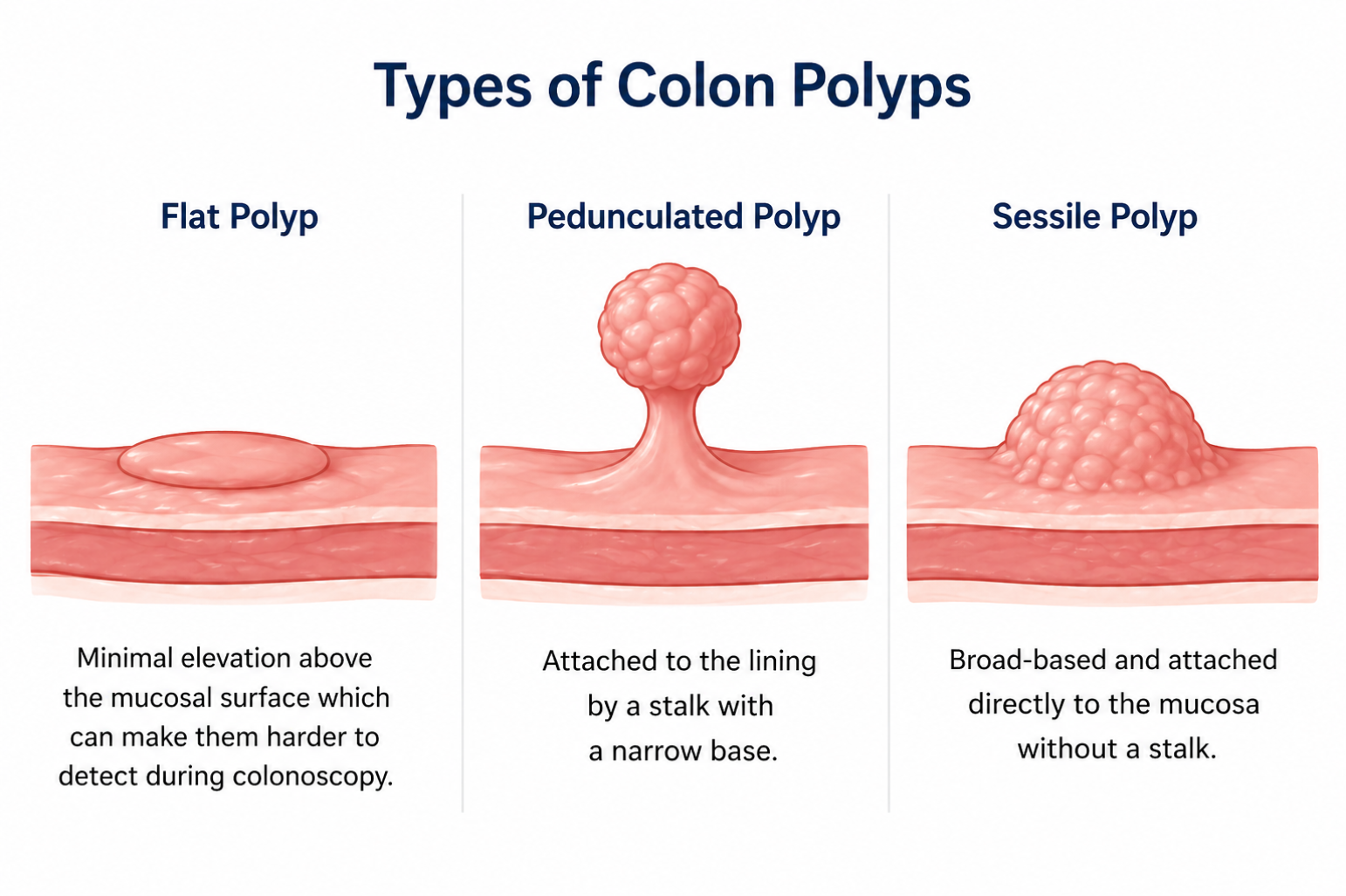
What Causes Colon Polyps?
Colon polyps develop due to abnormal cell growth in the lining of the colon. While the exact cause is often not clear, several factors are known to increase risk.
Age
Polyps become more common with age, particularly after 50. The risk of larger or more advanced polyps increases over time. However, rates are rising in younger individuals, which is why screening now begins at age 45 for average-risk adults.
Family History
A family history of colorectal cancer or advanced polyps increases risk, especially in first-degree relatives. This may influence when screening should begin and how frequently it is performed.
Genetic Conditions
Certain inherited syndromes are associated with significantly increased polyp burden and cancer risk, including:
- Familial adenomatous polyposis (FAP)
- Lynch syndrome
- MUTYH-associated polyposis (MAP)
- Serrated polyposis syndrome
Inflammatory Bowel Disease
Long-standing ulcerative colitis or Crohn’s disease involving the colon can increase the risk of developing precancerous changes over time.
Lifestyle and Metabolic Factors
Several modifiable factors are associated with an increased risk of colon polyps:
- Tobacco use
- Obesity
- Diets high in red or processed meats and low in fiber
- Moderate to heavy alcohol use
- Physical inactivity
Risk may increase with the number of these factors present.
Metabolic health also plays an important role. Conditions such as type 2 diabetes and metabolic syndrome (a combination of elevated blood pressure, blood sugar, cholesterol abnormalities, and excess weight) are associated with a higher likelihood of developing polyps.
What Are the Symptoms of Colon Polyps?
Many colon polyps do not cause symptoms, especially when small. When symptoms do occur, they may include:
- Rectal bleeding or blood in the stool
- Change in bowel habits (diarrhea or constipation)
- Abdominal pain or cramping (rare)
- Iron-deficiency anemia from chronic bleeding
Because many polyps are asymptomatic, screening is essential for early detection.
How Are Colon Polyps Diagnosed?
Colon polyps are often detected during routine screening, frequently before any symptoms develop. Several screening methods are available, each with distinct advantages and limitations.
Colonoscopy
Colonoscopy is the most comprehensive method and remains the gold standard for both detecting and treating colon polyps. A thin, flexible camera is used to examine the entire colon, and polyps can be removed during the same procedure.
Because polyps are treated at the time they are found, colonoscopy is the only screening test that can directly prevent colorectal cancer by eliminating precancerous growths before they progress.
CT Colonography (Virtual Colonoscopy)
CT colonography uses specialized imaging to evaluate the colon. It can detect larger polyps but does not allow for removal. If abnormalities are identified, a standard colonoscopy is required for further evaluation and treatment.
Stool-Based Testing
Multi-target stool DNA testing (such as Cologuard) detects blood and abnormal DNA markers associated with colorectal cancer and advanced polyps. These tests are noninvasive but have important limitations:
- They do not remove polyps
- A positive result requires follow-up colonoscopy
- Detection of precancerous polyps is less sensitive, particularly for smaller lesions
- This test has approximately 93% sensitivity for detecting colorectal cancer but only 42-43% sensitivity for detecting advanced adenomas – which means that half of these precancerous lesions may be missed. For smaller, non-advanced adenomas, the detection rate is even lower.
A negative result does not exclude the presence of precancerous polyps, and false-positive results can occur.
Screening methods that allow for both detection and removal of polyps provide the greatest preventive benefit.
How Are Colon Polyps Treated?
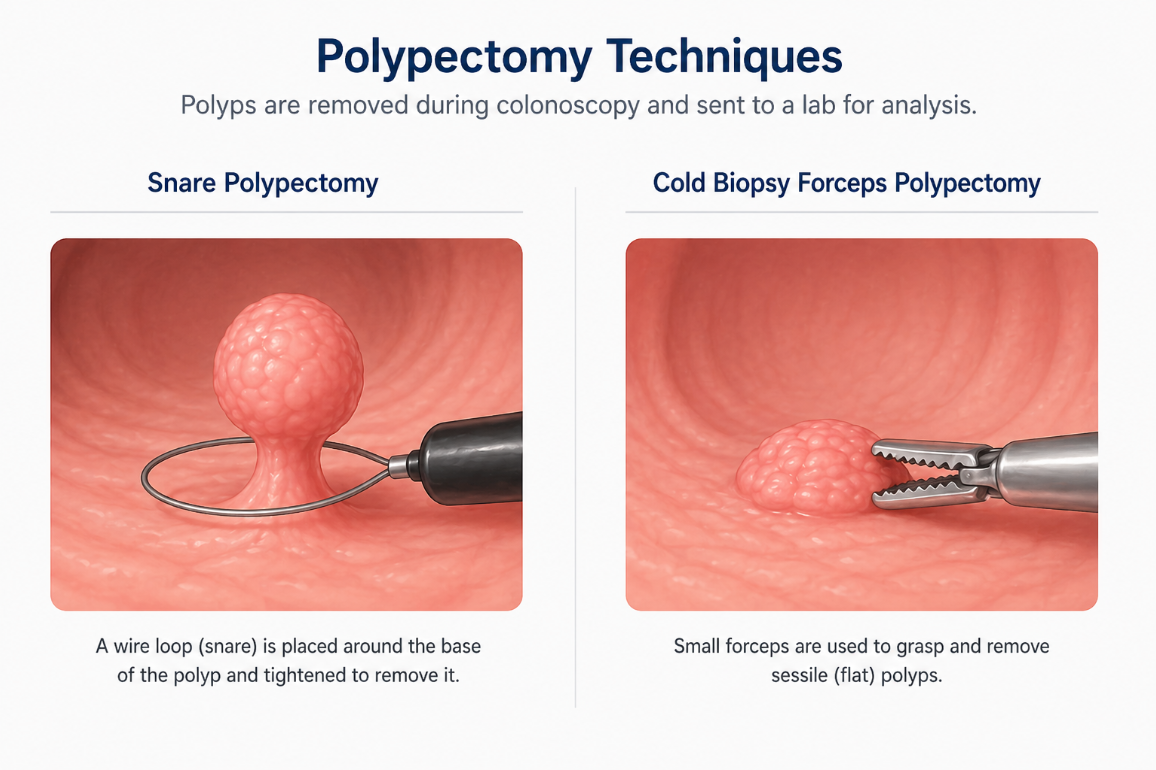
Polyp Removal (Polypectomy)
Most colon polyps are removed during colonoscopy. This allows for diagnosis and treatment in a single procedure and is a key step in preventing colorectal cancer. The process is safe, well-tolerated, and patients typically experience minimal to no discomfort afterward.
Surgical Removal
Surgery is rarely required but may be necessary for very large polyps or those that cannot be safely removed endoscopically.
Follow-Up Surveillance
After polyp removal, repeat colonoscopy is often recommended to monitor for new polyps. The timing depends on:
- Number of polyps
- Size and type
- Individual risk factors
Careful follow-up is an important part of prevention, helping ensure that any new or recurrent polyps are identified early.
What Happens If Polyps Are Not Treated?
While many polyps are benign, some can progress over time. Potential risks include:
- Cancer development: Certain polyps, particularly adenomatous and serrated types, can evolve into colorectal cancer
- Bleeding: Some polyps may bleed, occasionally leading to anemia
- Obstruction (rare): Very large polyps can partially block the colon
Colon polyps are common and often do not cause symptoms. Early detection and removal are central to preventing colorectal cancer. Colonoscopy remains the most effective method because it allows for both identification and treatment in a single setting.
Screening is recommended beginning at age 45 for most individuals, or earlier for those with additional risk factors. We take a careful, individualized approach to screening and surveillance, with the goal of early detection, prevention, and long-term digestive health.
Frequently Asked Questions (FAQ)
What are colon polyps?
Are all colon polyps cancerous?
What causes colon polyps?
Do colon polyps cause symptoms?
How are colon polyps detected?
What is the best test for detecting colon polyps?
Can stool tests detect colon polyps?
What happens if a colon polyp is found?
Can colon polyps come back after removal?
Are colon polyps dangerous?
Who is at higher risk for colon polyps?
Can colon polyps be prevented?
Do I need screening if I feel well?