
Overview
Crohn’s disease is a chronic inflammatory condition that can affect any part of the digestive tract, most commonly the small intestine and colon. It occurs when the immune system becomes overactive and causes ongoing inflammation in the gastrointestinal tract, leading to symptoms such as diarrhea, abdominal pain, and fatigue. The condition often follows a pattern of flare-ups and remission. While there is no cure, a range of effective treatments can control inflammation, manage symptoms, and help maintain long-term quality of life.
What is Crohn’s Disease?
Crohn’s disease is a chronic inflammatory condition that affects the gastrointestinal (GI) tract. While it can involve any part of the digestive system from the mouth to the anus, it most commonly affects the small intestine and/or colon.
Crohn’s disease and ulcerative colitis are the two primary conditions that fall under a broader group of disorders known as inflammatory bowel disease (IBD).
What Causes Crohn’s Disease?
The exact cause of Crohn’s disease is not fully understood. Research suggests that the inflammation seen in Crohn’s disease results from a complex interaction between:
- Genetic factors (inherited susceptibility)
- Immune system dysfunction
- Environmental triggers, such as gut bacteria or other exposures
In people who have Crohn’s disease, the immune system becomes activated but does not properly shut off. This ongoing immune response leads to chronic inflammation and damage to the intestinal lining. A primary goal of treatment is to regulate this immune activity and reduce inflammation.
Signs and Symptoms of Crohn’s Disease
Symptoms vary significantly between individuals and may change over time. Common symptoms include:
- Persistent diarrhea (loose, watery, or frequent bowel movements)
- Abdominal pain or cramping
- Rectal bleeding
- Fatigue
- Fever
- Loss of appetite and unintended weight loss
Additional symptoms may include fever, bloating, nausea, or vomiting, particularly in patients with stricturing disease. In children and adolescents, growth retardation or pubertal delay might be the only presenting sign. Approximately one-fifth of patients present with perianal lesions, including skin tags, fissures, or fistulas.
Extraintestinal manifestations may occur in up to 50% of patients, most commonly affecting the joints, skin, and eyes.
Crohn’s disease is a chronic condition characterized by periods of flare-ups and remission. With appropriate treatment, the goal is to maintain long-term symptom control that does not interfere with quality of life.
What Are Risk Factors of Crohn’s Disease?
- Most commonly diagnosed between ages 15 and 35, though it can occur at any age. A second, smaller peak has been described between ages 50-60 years.
- Family history increases risk (about 20–25% of patients have a close relative with IBD)
- Higher prevalence among individuals of European Jewish descent
- Increasing incidence across diverse racial and ethnic groups
There is currently no reliable way to predict who will develop Crohn’s disease.
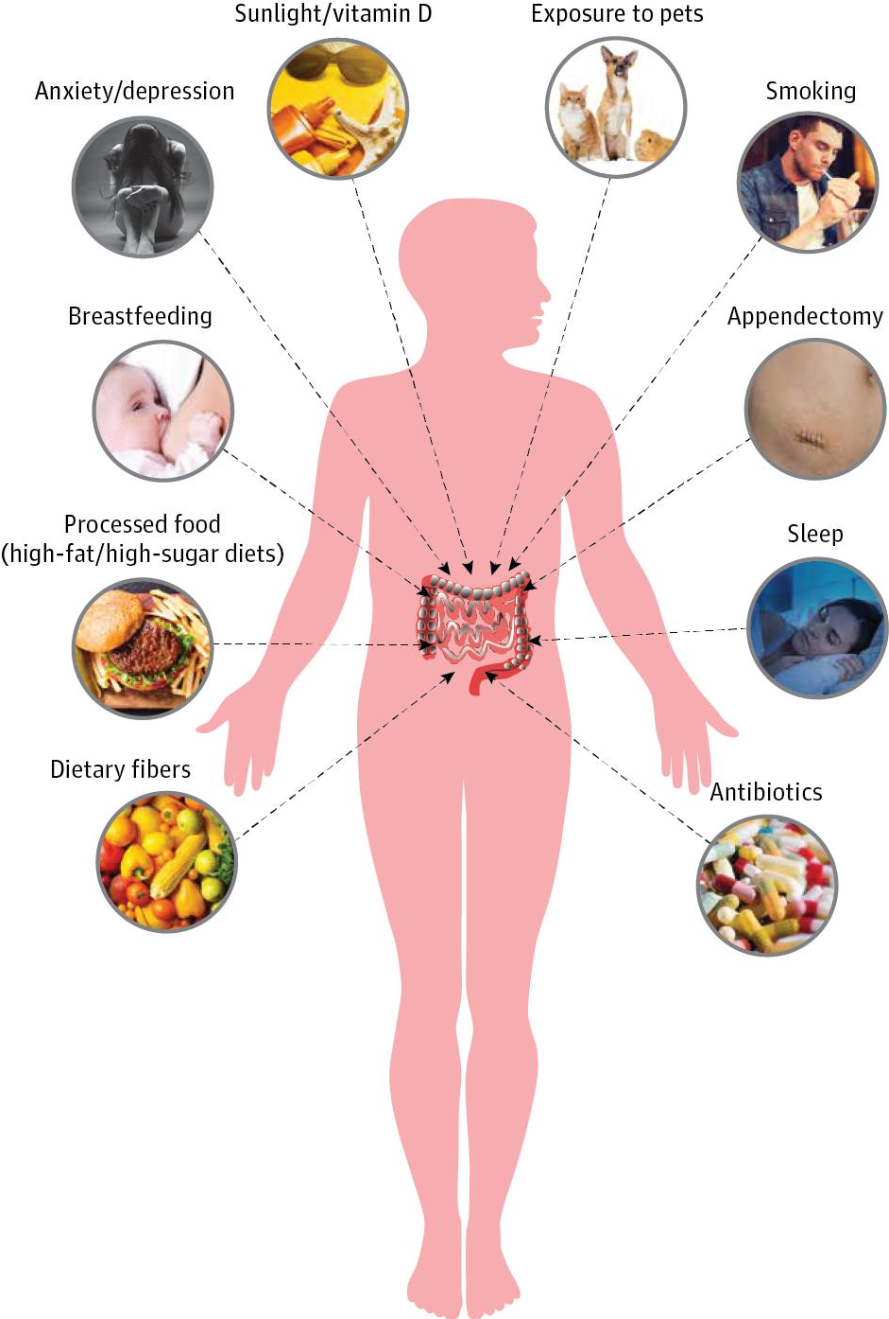
Environmental Factors That Modulate the Risk of Developing Inflammatory Bowel Diseases The Role of Environmental Factors in the Pathogenesis of Inflammatory Bowel Diseases: A Review. JAMA Pediatr. September 30, 2017. Content used under license from the JAMA Network® © American Medical Association
Environmental and Lifestyle Risk Factors
- Smoking is the most significant modifiable risk factor. Smokers also experience more disease flares, higher surgery rates, and worse treatment responses. Smoking cessation improves outcomes to levels comparable with nonsmokers.
- Diet and ultra-processed foods play an important role. Western dietary patterns high in saturated fats, red and processed meats, and refined sugars increase risk, while high intake of fruits, vegetables, and fiber appear protective. Consuming five or more servings of ultra-processed foods daily has been shown to increase Crohn’s disease risk. Mediterranean and anti-inflammatory dietary patterns may reduce IBD risk.
How is Crohn’s Disease Diagnosed?
There is no single test that definitively diagnoses Crohn’s disease. Diagnosis typically involves a combination of:
- Comprehensive medical history and physical examination
- Blood and stool testing
- Colonoscopy
- Imaging studies such as CT or MRI enterography
- Small bowel capsule endoscopy
Because Crohn’s disease can resemble other digestive conditions, careful evaluation by a gastroenterologist is essential.
Treatment Options For Crohn’s Disease
Currently, there is no cure for Crohn’s disease. The goal of treatment is to reduce inflammation, control symptoms, achieve and maintain remission, prevent complications, and improve quality of life. Treatment is individualized based on disease severity, location, complications, and prior medication response. Several groups of drugs are used to treat Crohn’s disease today.
- Aminosalicylates (5-ASA) may be used in select cases of very mild disease, though their benefit is much less clear than in ulcerative colitis.
- Corticosteroids including prednisone and budesonide are effective for short-term control of active inflammation but are not used for long-term maintenance due to associated side effects. The goal is always to taper and discontinue steroids as soon as possible.
- Immune Modifiers such as Azathioprine (Imuran®), 6-mercaptopurine (6MP, Purinethol®), and methotrexate help suppress the immune response and may be used to maintain remission, reduce steroid dependence, and aid in fistula healing. They are sometimes used alone or in combination with biologic therapy.
- Biologic and targeted therapies are now the mainstay of treatment for moderate to severe Crohn’s disease. These medications target specific pathways in the immune system and can both induce and maintain remission.
Role of Surgery in Crohn’s Disease
Despite advances in medical therapy, many patients with Crohn’s disease will require surgery at some point. Surgery may be necessary for:
- Bowel obstruction
- Abscesses
- Fistulas or strictures
- Disease that is not adequately controlled with medication
Surgery is not a cure, as Crohn’s disease often recurs near the surgical site. The goal of surgery is to preserve bowel function and improve quality of life.
Nutrition and Lifestyle Considerations
No specific diet has been shown to cause or cure Crohn’s disease. However, dietary adjustments can help manage symptoms and support healing.
- During active disease, soft or low-fiber foods may be better tolerated
- Adequate protein intake supports tissue repair
- Vitamin and mineral deficiencies (including iron, vitamin B12, and vitamin D) are common and may require supplementation
Stress does not cause Crohn’s disease, but it may worsen symptoms. Addressing emotional health and stress management can be an important part of comprehensive care.
Crohn’s Disease and Women’s Health
While Crohn’s disease affects people of all genders, there are certain considerations that may be particularly relevant for women.
Fertility
- Most individuals with Crohn’s disease have normal fertility, especially when disease is well controlled
- Active inflammation or prior abdominal surgery may affect fertility in some cases
Pregnancy
- Well-controlled Crohn’s disease at conception is associated with healthier pregnancy outcomes
- Many Crohn’s disease medications are considered safe during pregnancy and are often continued to prevent disease flares
Hormonal Changes
- Symptoms may fluctuate with menstrual cycles, pregnancy, postpartum changes, or menopause
Pre-pregnancy counseling and coordination between gastroenterology and obstetric care are recommended for individuals planning pregnancy.
Dr. Jaclyn Chesner completed her gastroenterology fellowship training at NYU Langone, where she trained alongside experts in the Inflammatory Bowel Disease (IBD) division. She provides comprehensive, evidence-based care for patients with Crohn’s disease and is currently accepting new patients.
What is Crohn’s disease?
What causes Crohn’s disease?
What are the symptoms of Crohn’s disease?
What parts of the body does Crohn’s disease affect?
Is Crohn’s disease the same as ulcerative colitis?
Is Crohn’s disease curable?
How is Crohn’s disease diagnosed?
What triggers Crohn’s disease flares?
What treatments are available for Crohn’s disease?
Will I need surgery for Crohn’s disease?
Can diet help manage Crohn’s disease?
Is Crohn’s disease serious?
Does stress cause Crohn’s disease?
When should I see a doctor?