
Difficulty Swallowing (Dysphagia)
What is Dysphagia?
Dysphagia is the medical term for difficulty or discomfort with swallowing. Swallowing disorders are common, affecting an estimated 10–20% of the population, with approximately 15 million Americans reporting symptoms.
Eating and drinking are everyday activities we often take for granted, yet normal swallowing requires precise coordination of muscles in the mouth, throat (pharynx), and esophagus.
Swallowing occurs in three coordinated phases:
- Oral (mouth) phase – Food or liquid is chewed, formed into a bolus, and moved into the throat
- Pharyngeal (throat) phase – The bolus is propelled downward while the airway closes to prevent aspiration
- Esophageal phase – Coordinated muscle contractions move food into the stomach while the upper and lower esophageal sphincters relax appropriately
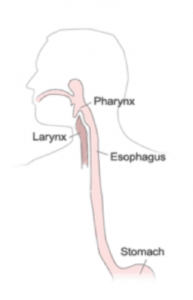
In healthy individuals, swallowing is both efficient and safe. The airway is protected as the larynx (voice box) closes during swallowing, and the process adjusts seamlessly based on the size and type of food or liquid. Minimal residue remains in the mouth or throat, and food passes smoothly into the esophagus.
Disruption at any point in this process can lead to symptoms of dysphagia.
What Are The Causes of Dysphagia?
Swallowing disorders can be broadly categorized based on where in the swallowing process the difficulty occurs:
Oropharyngeal Dysphagia
Oropharyngeal dysphagia occurs before food reaches the esophagus and is typically related to disorders affecting the mouth or throat.
Patients may experience:
- Difficulty initiating a swallow
- Sensation of food “going down the wrong pipe”
- Coughing or choking during meals
Potential complications include malnutrition, dehydration, and aspiration (food or liquid entering the airway), which can lead to pneumonia or chronic lung disease.
Common causes include:
- Neurological disorders: stroke, Parkinson’s disease, dementia, ALS, multiple sclerosis
- Structural abnormalities: Zenker’s diverticulum, cervical osteophytes, head and neck cancer, prior radiation
- Medications: sedatives or drugs that impair coordination
- Trauma: brain or spinal cord injury
Esophageal Dysphagia
Esophageal dysphagia originates in the esophagus, the muscular tube that carries food from the throat to the stomach. Patients often describe a sensation of food “sticking” in the chest or throat, sometimes with regurgitation.
Common causes include:
- Structural abnormalities: rings, strictures, tumors
- Inflammation: eosinophilic esophagitis, gastroesophageal reflux disease (GERD)
- Motility disorders: achalasia, esophageal spasm, scleroderma
- Malignancy: esophageal or head and neck cancers
Because dysphagia can sometimes indicate serious underlying conditions, a thorough evaluation is essential.
What Are The Signs And Symptoms of Dysphagia?
Swallowing difficulties may present with one or more of the following:
- Coughing, choking, or gagging during eating or drinking
- Chest discomfort or pain with swallowing
- Sensation of food or liquid leaking from the mouth or becoming stuck in the throat
- Prolonged time needed to eat or drink
- Recurrent pneumonia or respiratory infections (often related to aspiration)
- Unintentional weight loss
What Are The Risk Factors of Dysphagia?
Several factors can increase the likelihood of developing dysphagia:
- Aging: Changes in muscle strength and coordination may increase risk, although difficulty swallowing is not a normal part of aging
- Neurological disorders: Stroke, Parkinson’s disease, ALS, multiple sclerosis, or dementia
- Head and neck cancer or prior radiation therapy
- Chronic reflux or esophageal disease
- Prior esophageal surgery or strictures
How do we Evaluate Dysphagia?
Evaluation of dysphagia begins with a detailed history and physical examination, including assessment of oral, pharyngeal, and esophageal function.
Diagnostic testing may include:
- Physical examination and oropharyngeal inspection: Assessment of the mouth, throat, and swallowing mechanics
- Videofluoroscopic swallow study (modified barium swallow): Evaluates swallowing in real time, assesses risk of aspiration, and identifies structural or functional abnormalities
- Upper endoscopy (EGD): Direct visualization of the esophagus and stomach with the ability to obtain biopsies when needed
- Esophageal manometry: Measures pressure and coordination of esophageal muscles to evaluate for motility disorders
While swallowing difficulty or mild discomfort may seem minor, new or unexplained dysphagia should be evaluated by a gastroenterologist. Swallowing problems can sometimes signal more serious underlying conditions, and early evaluation helps guide appropriate treatment.
What is dysphagia?
What are the symptoms of dysphagia?
What causes dysphagia?
What is the difference between oropharyngeal and esophageal dysphagia?
Is dysphagia serious?
When should I see a doctor for dysphagia?
How is dysphagia evaluated?
What is a swallow study?
Can acid reflux cause dysphagia?
Can dysphagia be treated?
What foods are easier to swallow with dysphagia?
Can dysphagia lead to complications?
Is difficulty swallowing a normal part of aging?